


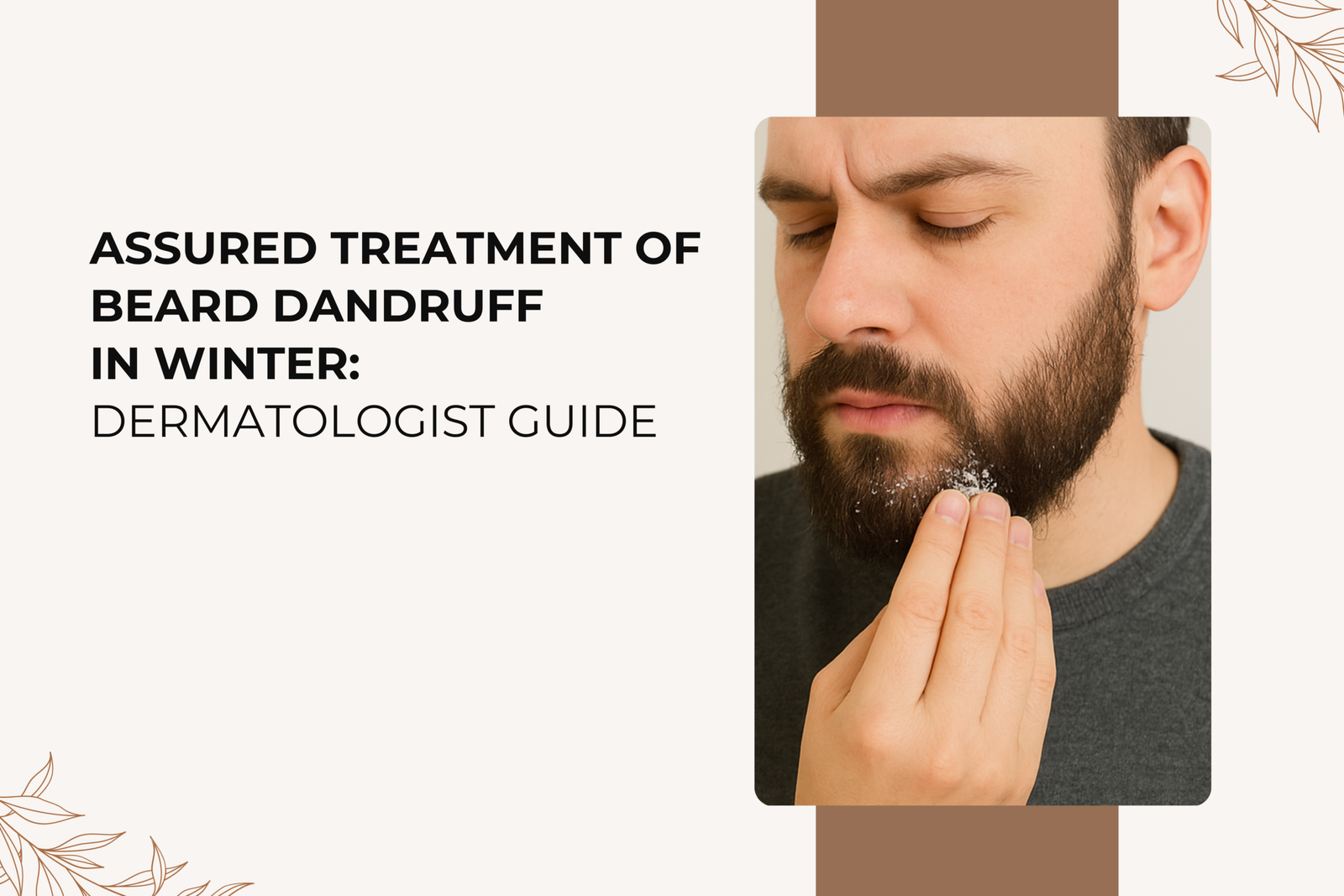
Winter brings a host of challenges for skin care — and if you’ve grown a beard, you may soon notice unwanted white flakes clinging to your whiskers. Beard dandruff (or “beardruff”) is not just a grooming inconvenience; it can reflect underlying skin issues, aggravated by cold, dry weather and lack of proper beard care. In this post, we cover what causes beard dandruff — especially in winter — and how you can tackle it with dermatologist‑approved techniques to keep your beard healthy, soft, and flake-free.
What Causes Beard Dandruff – Especially in Winter
1. Overgrowth of Skin Yeast & Sebum Imbalance
- On everyone’s skin lives a harmless fungus called Malassezia globosa. On the scalp or beard‑covered face, this fungus breaks down sebum (the oil produced by skin), producing oleic acid. For some people, oleic acid irritates the skin and triggers flaking.
- Overproduction of sebum — common in beard zones — provides ample “food” for Malassezia, increasing the chances of dandruff flare‑ups.
2. Dry, Cold Air and Skin Barrier Disruption
- Winter’s cold air — often compounded by indoor heating or low humidity — draws moisture out of skin. Under a beard, this results in dryness and skin‑barrier damage, making skin brittle, flaky, and prone to dandruff.
- When your skin barrier weakens, dead skin cells accumulate and shed — but the flakes get trapped in beard hair, appearing as visible “beard dandruff.”
3. Poor Cleansing & Harsh Grooming Products
- Using harsh soaps, regular shampoos (especially those with sulfates or strong detergents), or frequent hot water washing can strip away natural oils, aggravating dryness under the beard.
- On the flip side, neglecting proper cleansing allows oil, dead skin, and debris to build up beneath beard hair — another recipe for dandruff.
4. Skin Conditions (e.g. Seborrheic dermatitis, eczema, psoriasis)
In such cases, simple moisturizing or cleansing may not be enough.
Sometimes beard dandruff isn’t just “dry skin” — it may signal underlying skin conditions like seborrheic dermatitis, which causes oily, itchy, scaly patches underneath facial hair.
Dermatologist‑Recommended Winter Routine to Treat Beard Dandruff
Here’s a beard‑care plan tailored to winter conditions — combining cleansing, exfoliation, hydration, and hygiene that dermatologists and skin‑care experts recommend.
✅ Step 1: Gentle Cleansing (2–3 times a week)
- Use a beard‑specific cleanser or mild face wash rather than harsh soaps or regular body shampoos. These are less likely to strip skin oils and disrupt the skin barrier.
- Wash with lukewarm water, not hot — hot water dries out skin faster, worsening flaking.
✅ Step 2: Gentle Exfoliation (1–2 times per week)
- Use a soft‑bristle beard brush or a mild facial scrub to gently remove dead skin cells. This helps prevent accumulation of flakes beneath the beard.
- Always be gentle. Rough scrubbing can irritate skin and make beardruff worse.
✅ Step 3: Moisturize & Nourish Beard Skin Daily
- After cleansing or showering, apply a light beard oil or balm — especially those containing natural oils like argan, jojoba, or coconut. These oils mimic natural skin sebum and help restore moisture.
- Work the oil/balm deep so it reaches the skin underneath the beard hair, not just the hair strands. This ensures hydration where it’s most needed — at the skin surface.
✅ Step 4: Use Anti‑Dandruff / Antifungal Products (when needed)
- If flakes persist despite regular cleansing & moisturizing, consider a medicated shampoo containing antifungal or dandruff‑fighting ingredients such as Ketoconazole, zinc pyrithione, or selenium sulfide.
- Massage shampoo thoroughly so it reaches the skin beneath your beard — that’s where yeast and fungus thrive.
✅ Step 5: Maintain Beard Hygiene & Healthy Lifestyle
- Keep your beard tools (combs, brushes, towels) clean and personal — sharing or using dirty tools can spread yeast or fungal spores.
- Stay hydrated, eat a balanced diet rich in vitamins and omega‑3s to support skin health, and consider adding a humidifier if your indoor air is too dry.
✅ Step 6: Know When to Seek Professional Help
- If beard dandruff is itchy, red, greasy, or painful, or if home‑care isn’t reducing flakes — you may have an underlying skin condition such as seborrheic dermatitis or eczema, which needs a dermatologist’s attention.